Mild, temporary gum tenderness after an adjustment or a new set of aligner trays is normal. Persistent redness, bleeding when you brush, ongoing swelling, or visible gum recession is not — and any of those is worth mentioning to your orthodontist or dentist rather than waiting it out. Orthodontic appliances themselves don’t cause gum disease, but they can make it easier for plaque to hide if your hygiene routine slips, which is exactly why gum health deserves real attention during treatment, not just a passing thought.
Why Gum Health Matters More for Adults in Treatment
Adult mouths and teenage mouths are not the same starting point. By the time most adults consider orthodontic treatment, they may already have some degree of gum recession, sensitivity, or a history of dental work that teenagers simply haven’t had time to develop. That’s not a reason to avoid treatment — it’s a reason to be more attentive during it.
Braces and aligners both change the environment in your mouth somewhat. Brackets and wires create more nooks where plaque can accumulate along the gumline if brushing technique doesn’t adapt. Aligners are gentler on gum tissue in that sense, since there’s no fixed hardware, but they trap saliva and bacteria against your teeth for long stretches of the day, so hygiene still matters just as much. Either way, the appliance isn’t the risk — inconsistent hygiene around the appliance is.
Life circumstances play a role here too, even if it’s not something most people think about in dental terms. Adults juggling demanding jobs, travel schedules, and family obligations don’t always have the luxury of a perfectly consistent hygiene routine every single day. A late night that turns into “I’ll brush extra well in the morning,” a work trip that disrupts a normal routine, or just general life stress can all chip away at consistency over the weeks and months that orthodontic treatment takes. None of that makes someone a bad patient — it just means gum health is worth checking in on periodically rather than assuming it’s fine by default.
Normal vs. Concerning Signs
A little gum tenderness for a day or two after your wires are tightened, or right after you switch to a new aligner tray, is expected. Your teeth are moving, which puts mild pressure on the surrounding tissue, and that pressure can make gums feel a bit puffy or sensitive to brushing for a short window.
What’s not expected is gum irritation that sticks around, gets worse, or comes with other symptoms. Persistent redness along the gumline, gums that bleed every time you brush or floss (not just once after you were a little aggressive), ongoing swelling that doesn’t settle down between adjustments, or gums that appear to be pulling away from your teeth are all signals worth raising. None of these are things to self-diagnose over the internet — they’re things to mention at your next visit, or sooner if they’re bothering you.
How Braces and Aligners Differ in Gum-Health Risk
Fixed braces create more physical opportunities for plaque to hide — around brackets, under wires, in the small gap where a bracket meets the tooth surface. That means brushing technique has to adapt: an angled toothbrush, careful attention right at the gumline, and tools like floss threaders or a water flosser to get where a regular brush and floss can’t quite reach.
Aligners remove that particular problem since there’s no fixed hardware, but they introduce a different one. A tray that isn’t cleaned regularly, or gums under a tray that isn’t fitting quite right, can still get irritated. Attachments — the small tooth-colored bumps sometimes used to help aligners grip certain teeth — are another spot that benefits from a bit of extra attention, since they create small ledges where plaque likes to collect.
Practical Hygiene Habits During Treatment
The habits that protect your gums during orthodontic treatment aren’t complicated, but they do take slightly more intention than a pre-treatment routine. Brushing at roughly a 45-degree angle toward the gumline, rather than straight-on, helps clear plaque from the spot where teeth and gums meet — which is exactly where most irritation starts.
Flossing daily matters just as much during treatment as before it, and a water flosser is a genuinely useful upgrade for anyone with braces, since it can reach spots around brackets and wires that traditional floss struggles with. Beyond your at-home routine, many adults benefit from slightly more frequent professional cleanings during active treatment — checking with your general dentist about whether a six-month interval still makes sense, or whether more frequent visits would serve you better while your appliance is in.
A simple daily sequence helps a lot of patients stay consistent without overthinking it:
- Brush for a full two minutes, angling the bristles toward the gumline rather than straight across the tooth surface.
- Floss once a day, using a threader or water flosser if brackets and wires make traditional floss difficult to maneuver.
- Rinse thoroughly, checking for any food or plaque buildup around brackets, wires, or attachments in a mirror.
- For aligner wearers, brush the trays separately before reinserting them, rather than putting them back in straight from your pocket or case.
None of these steps take much extra time once they’re habits, but skipping them consistently — even for a few weeks — is usually where gum irritation starts to show up.
Why Dr. Brice Evaluates Gum Health at Every Exam
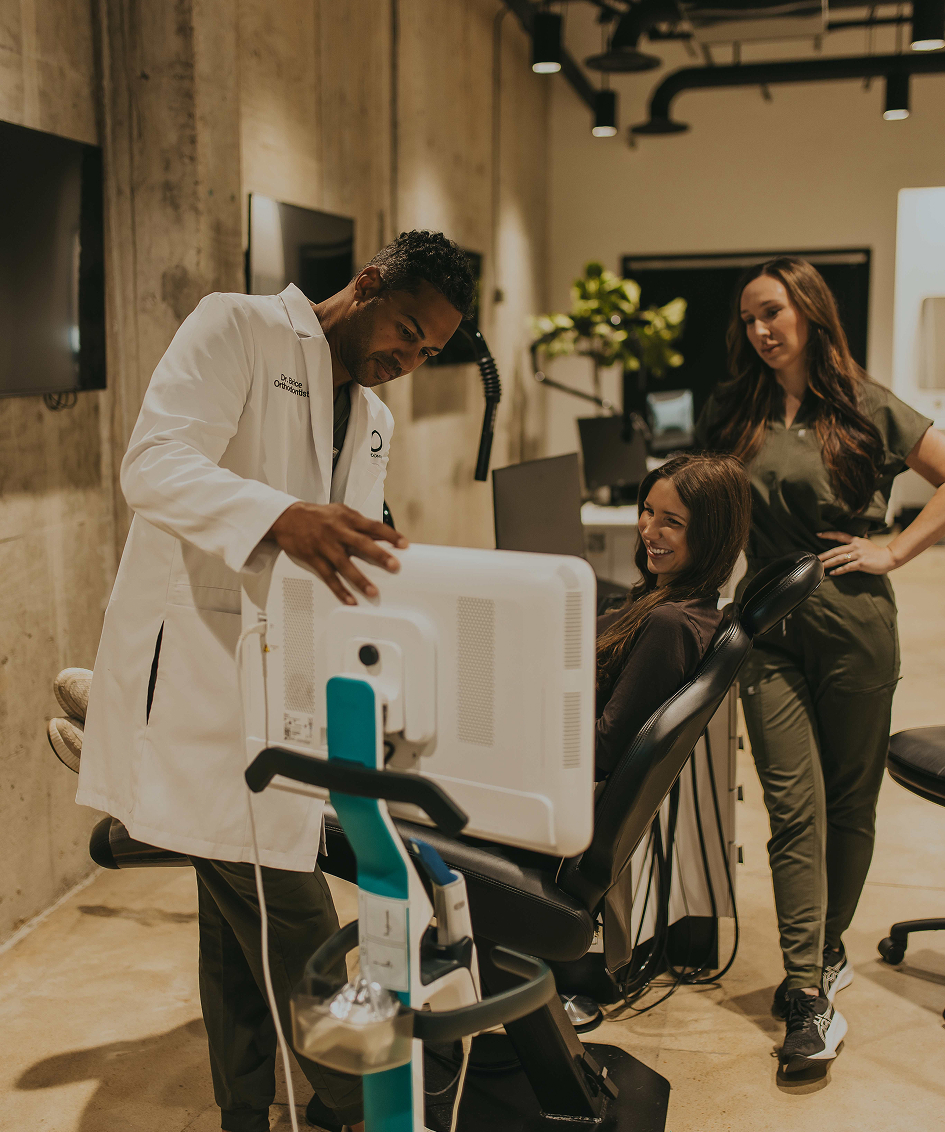
Before recommending any treatment plan, Dr. Brice evaluates the health of your gums and supporting tissue, not just the position of your teeth. That’s a deliberate part of the process, not a formality — gum health affects how predictably teeth can move, how comfortable treatment feels day to day, and whether a particular appliance is even the right starting point.
Dr. Brice’s background is specifically in adult orthodontics: he trained in a Washington, D.C. program built for adult patients, holds Invisalign Platinum Plus Provider status, and has more than a decade of clinical experience treating adults exclusively — which means gum tissue that’s already seen some wear and tear, some past dental work, or some existing sensitivity isn’t an unusual case for him. It’s the norm. That’s part of what shapes what to expect at your first visit, where a gum and tissue evaluation is simply built into the exam.
When a Referral to a Periodontist or Dentist Makes Sense
Orthodontists and general dentists work alongside each other, not in place of one another, and gum health is one of the clearest examples of why. An orthodontist focuses on tooth position and bite; a dentist or periodontist focuses on the health of the gum and bone tissue supporting those teeth. Both matter, and they’re not interchangeable.
If gum recession, more advanced gum disease, or other periodontal concerns come up during a consultation or during treatment, it’s reasonable and appropriate for that to involve a conversation with your general dentist or a referral to a periodontist. This kind of coordinated care is normal in orthodontics — it’s not a sign that something has gone wrong, just a sign that your care team is paying attention to the whole picture rather than just the teeth that are moving.
In practice, this usually looks less dramatic than it sounds. It might mean your orthodontist recommends finishing a cleaning with your dentist before starting active treatment, or flags a specific area to keep an eye on together over the following months. The goal on every side of that conversation is the same: making sure the foundation your teeth are moving on is healthy enough to support that movement well, so the results actually hold up once your treatment is complete.
Frequently Asked Questions
Is it normal for gums to bleed a little with braces?
Occasional light bleeding right after starting a more thorough brushing or flossing routine around new hardware can happen, especially in the first couple of weeks. Bleeding that continues regularly, though, usually points to inflammation that’s worth mentioning to your dentist or orthodontist rather than ignoring.
Can Invisalign cause gum recession?
Invisalign trays themselves aren’t a typical cause of gum recession. Recession is more often related to brushing technique, existing gum health, or other factors independent of the aligners. That said, any ongoing gum changes during treatment are worth discussing with your dentist.
How often should I see a dentist while in orthodontic treatment?
Most adults continue with their regular dental cleaning schedule, though some benefit from more frequent visits while braces or aligners are in. It’s worth asking your general dentist what makes sense given your specific gum health and treatment timeline.
Do gums go back to normal after treatment ends?
Mild, treatment-related tenderness typically resolves on its own once teeth settle into their new positions. Gum recession or more significant changes, if they occurred, are a separate issue best evaluated by your dentist, since orthodontic treatment alone doesn’t resolve or reverse those changes.
Gum health and tooth position are two different things that deserve two different kinds of attention — and a good treatment plan accounts for both from day one. Request your free exam and we’ll take a full look at your teeth, bite, and gum health before recommending anything.