Orthodontic treatment can help with jaw pain that’s caused or worsened by how your teeth meet, but it isn’t a guaranteed fix for every case of TMJ discomfort. If your bite is putting uneven pressure on your jaw joint, correcting that alignment may ease some of the strain. But TMJ disorders can have several contributing causes, so the right first step is a proper evaluation, not an assumption that braces or Invisalign alone will solve it.
Jaw pain is frustrating precisely because it can come from so many different places. Here’s how bite alignment fits into the picture, what an orthodontic evaluation actually looks for, and where the limits of that evaluation are.
What TMJ/TMD Actually Means
TMJ refers to your temporomandibular joint, the hinge that connects your jawbone to your skull on each side of your face, just in front of your ears. When people talk about “TMJ” as a problem, they usually mean temporomandibular disorder, or TMD, which is an umbrella term for pain or dysfunction involving that joint and the muscles around it.
In plain terms, TMD can show up as clicking or popping when you open your mouth, soreness in the jaw muscles or near your ears, a jaw that feels tight or limited when you try to open wide, or general fatigue in the muscles you use to chew. It can be mild and occasional, or persistent enough to interfere with eating and talking. The severity and cause vary a lot from person to person, which is exactly why it needs individual evaluation rather than a one-size-fits-all explanation.
Some people notice symptoms mainly in the morning, which can point toward nighttime clenching, while others notice it more after a long day of talking or eating tougher foods, which points more toward muscle fatigue from overuse. Neither pattern automatically tells you the cause, but noticing when your symptoms show up is useful information to bring to an evaluation.
How Misalignment Can Contribute to Jaw Strain
Your bite is the relationship between your upper and lower teeth when your jaw closes. When that relationship is off, some teeth may meet before others, forcing your jaw to shift, compensate, or work harder to find a comfortable resting position. Over time, that extra effort and uneven force distribution can strain the jaw joint and the muscles around it.
This doesn’t mean every case of jaw pain traces back to crooked teeth. It means bite alignment is one legitimate contributing factor among several, alongside things like clenching habits, joint structure, arthritis, or stress-related muscle tension. An orthodontist’s job during an evaluation is to figure out whether your bite is playing a meaningful role in what you’re feeling, not to assume it automatically is.
What an Orthodontic Evaluation for Jaw Pain Looks Like
At a free exam, the evaluation for jaw-related concerns typically starts with a conversation about your symptoms: when the pain shows up, what makes it better or worse, and whether you notice clicking, popping, or limited movement. From there, your orthodontist will assess how your bite comes together, checking for uneven contact points, crossbites, or teeth that force your jaw into an awkward position to close fully.
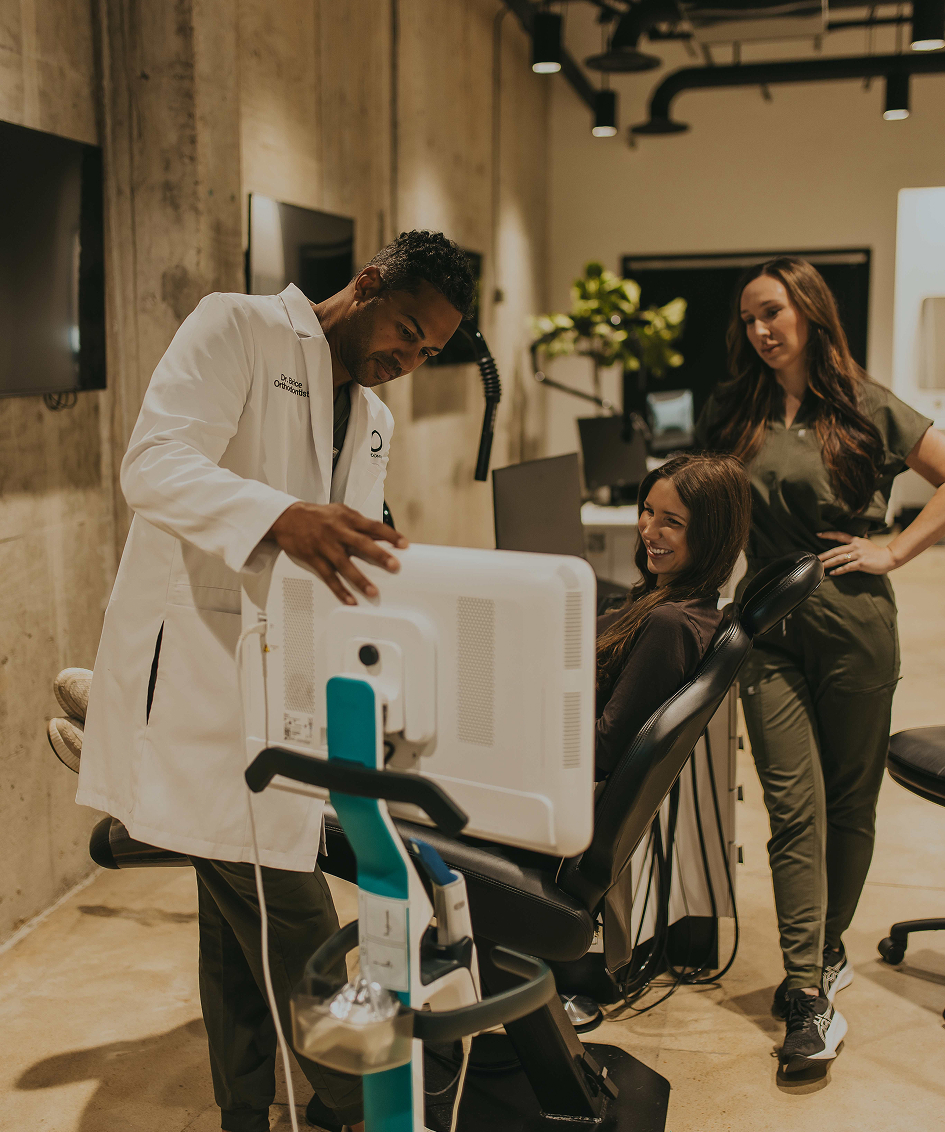
Digital imaging plays a role here too. Modern scanning technology lets your orthodontist see a detailed picture of how your teeth align and interact, which helps identify whether bite mechanics are contributing to the strain you’re feeling. From there, you and your orthodontist can talk through whether orthodontic treatment is a reasonable piece of the solution, or whether your symptoms point toward something that needs a different kind of specialist first.
This is also a good time to mention any history of jaw clicking, previous injuries, or grinding habits, since all of that context helps your orthodontist form a more complete picture. An evaluation isn’t just about looking at your teeth in isolation, it’s about understanding how your whole bite functions together and where the strain in your particular case is actually coming from.
What Treatment Can Realistically Help With, and What It Can’t
This is the part worth being careful about. If your jaw pain is genuinely tied to uneven bite forces, straightening your teeth and correcting how your jaw closes can reduce that source of strain over time. Many patients who complete orthodontic treatment for bite-related issues report feeling less tension once their bite settles into a more even, stable position.
But orthodontic treatment is not a cure-all for TMJ disorders. Some jaw pain comes from joint damage, arthritis, chronic clenching or grinding, or muscular issues that have little to do with tooth alignment. In those cases, braces or Invisalign might improve your bite, but they won’t resolve the underlying joint or muscle problem. If your evaluation suggests your pain is more complex than a bite issue, the honest answer is that you may need input from an oral and maxillofacial specialist, a physical therapist familiar with TMD, or your physician, in addition to or instead of orthodontic treatment. No orthodontist worth trusting should promise that straightening your teeth will single-handedly cure a serious TMJ disorder.
This is also why it’s worth being skeptical of any provider who promises a guaranteed timeline or outcome for TMJ relief before they’ve actually examined your bite. Jaw pain is genuinely multi-factored, and a responsible evaluation should be upfront about what’s realistic for your specific situation rather than offering a blanket promise.
Other Supportive Approaches Worth Knowing About
Orthodontic treatment isn’t the only tool available for jaw tension. Some patients explore Botox for jaw tension as a complementary option alongside or separate from orthodontic care, since it works differently by targeting the muscles involved in clenching rather than the bite itself. It’s a big enough topic that it deserves its own explanation, but it’s worth knowing this kind of option exists if bite correction alone isn’t addressing everything you’re feeling.
When to See a Doctor vs. When It’s Likely Just Muscle Tension
Occasional, mild jaw soreness, especially after a stressful week, a long day of talking, or chewing something tougher than usual, is often just muscle fatigue and tends to resolve on its own within a day or two. That’s different from pain that’s persistent, gets worse over time, comes with a jaw that locks or won’t open fully, or is accompanied by significant swelling or a bite that suddenly feels different.
If you’re dealing with the latter, it’s worth having it evaluated properly rather than waiting it out. An orthodontic exam can help determine whether bite alignment is contributing, and if your symptoms suggest something beyond that scope, a referral to the right specialist is the responsible next step. Dr. Brice, who trained specifically in adult orthodontics and has spent more than a decade treating adult bite cases, takes this kind of evaluation seriously rather than offering a one-size-fits-all answer. You can learn more about his background on the Meet Dr. Brice page.
Self-Care Tips You Can Safely Try in the Meantime
While you’re waiting on an evaluation, or if your soreness seems mild and situational, a few practical habits can take some pressure off your jaw. Stick to softer foods for a few days and skip anything especially hard, chewy, or that requires wide bites, like tough steak, bagels, or ice. Pay attention to whether you’re clenching your jaw during the day, especially when you’re concentrating or stressed, and try to consciously relax your jaw muscles when you notice it. A warm compress held against the jaw muscles for ten to fifteen minutes can also ease general muscle soreness in the short term.
None of these replace a proper evaluation if your pain is ongoing, but they’re reasonable, low-risk steps while you figure out your next move.
It’s also worth paying attention to posture and habits that might be adding to jaw tension without you realizing it, like resting your chin on your hand for long stretches at a desk, chewing gum constantly, or holding your phone between your ear and shoulder. None of these cause TMJ disorders on their own, but reducing extra strain on the jaw and surrounding muscles rarely hurts and can make day-to-day discomfort a little more manageable while you sort out next steps.
Frequently Asked Questions
Is jaw pain always related to my bite?
No. Bite alignment is one possible contributing factor among several, including clenching habits, joint issues, and muscle tension. An evaluation is the only reliable way to know whether your specific case is bite-related.
Can Invisalign or braces make TMJ worse before it gets better?
Some patients notice mild, temporary jaw muscle adjustment as their bite shifts during treatment, similar to the general soreness that comes with any orthodontic movement. This is different from a worsening TMJ disorder, and your orthodontist should be monitoring your comfort throughout treatment and adjusting the plan if something feels off.
How long does it take for bite-related jaw discomfort to improve after starting treatment?
It varies significantly by case, since it depends on how much correction is needed and how your body responds. Some patients notice improvement gradually as their bite becomes more even over the course of treatment, which for adults typically runs 12 to 24 months.
Should I see an orthodontist or a doctor first for jaw pain?
If you suspect your bite might be involved, or you’re already considering orthodontic treatment for other reasons, an orthodontic evaluation is a reasonable starting point. If your pain is severe, sudden, or accompanied by locking or significant swelling, it’s worth seeing your physician as well so nothing gets missed.
If jaw discomfort has you wondering whether your bite is part of the problem, a proper evaluation is the only way to know for sure. Request your free exam and let’s take an honest look at what’s going on.